String manipulation utilities. More...
Functions | |
| char * | str_chr (const char *s, int c) |
| Locates the first occurrence of a character in a string. | |
| int | str_cmp (const char *s1, const char *s2) |
| Compares two strings. | |
| char * | str_dup (const char *s1) |
| Duplicates a string. | |
| void | str_iteri (char *s, void(*f)(unsigned int, char *)) |
| Applies a function to each character of a string with its index. | |
| char * | str_join (char const *s1, char const *s2) |
| Concatenates two strings into a new string. | |
| size_t | str_lcat (char *dst, const char *src, size_t dstsize) |
| Appends src to dst with size limit. | |
| size_t | str_lcpy (char *dst, const char *src, size_t dstsize) |
| Copies src to dst with size limit. | |
| size_t | str_len (const char *s) |
| Calculates the length of a string. | |
| char * | str_mapi (char const *s, char(*f)(unsigned int, char)) |
| Creates a new string by applying a function to each character. | |
| int | str_ncmp (const char *s1, const char *s2, size_t n) |
| Compares at most n characters of two strings. | |
| char * | str_ndup (const char *src, size_t len) |
| Duplicates the first len bytes of a string. | |
| char * | str_nstr (const char *haystack, const char *needle, size_t len) |
| Locates a substring within a string, limited by length. | |
| char * | str_rchr (const char *s, int c) |
| Locates the last occurrence of a character in a string. | |
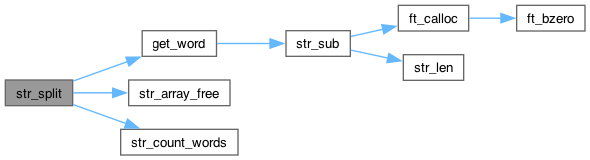
| char ** | str_split (char const *s, char c) |
| Splits a string into an array of strings using a delimiter. | |
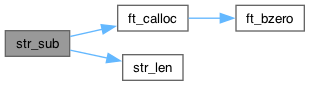
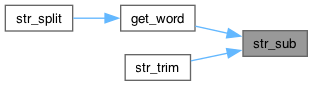
| char * | str_sub (char const *s, unsigned int start, size_t len) |
| Extracts a substring from a string. | |
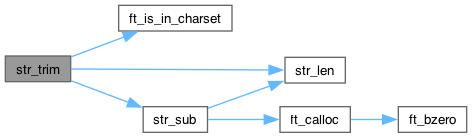
| char * | str_trim (char const *s1, char const *set) |
| Trims characters from the beginning and end of a string. | |
Detailed Description
String manipulation utilities.
Functions to search, copy, compare and transform strings.
Function Documentation
◆ str_chr()
| char * str_chr | ( | const char * | s, |
| int | c | ||
| ) |
Locates the first occurrence of a character in a string.
- Note
- Returned pointer is borrowed from s. Do not free it directly.
- If c is '\0', returns pointer to the terminating null.
- Parameters
-
s String to search (borrowed). c Character to find.
- Returns
- Pointer to the character (borrowed), or NULL if not found.

◆ str_cmp()
| int str_cmp | ( | const char * | s1, |
| const char * | s2 | ||
| ) |
Compares two strings.
- Parameters
-
s1 First string. s2 Second string.
- Returns
- Difference of first differing characters, or 0 if equal.
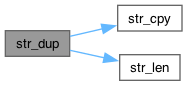
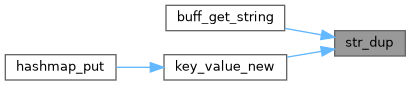
◆ str_dup()
| char * str_dup | ( | const char * | s1 | ) |
Duplicates a string.
- Note
- Caller owns the returned string and must free it.
- Parameters
-
s1 String to duplicate (borrowed).
- Returns
- Newly allocated copy (owned), or NULL on failure.
◆ str_iteri()
| void str_iteri | ( | char * | s, |
| void(*)(unsigned int, char *) | f | ||
| ) |
Applies a function to each character of a string with its index.
- Parameters
-
s String to iterate (modified in place). f Function taking index and character pointer.
◆ str_join()
| char * str_join | ( | char const * | s1, |
| char const * | s2 | ||
| ) |
Concatenates two strings into a new string.
- Note
- Caller owns the returned string and must free it.
- Parameters
-
s1 First string (borrowed). s2 Second string (borrowed).
- Returns
- Newly allocated concatenated string (owned), or NULL on failure.

◆ str_lcat()
| size_t str_lcat | ( | char * | dst, |
| const char * | src, | ||
| size_t | dstsize | ||
| ) |
Appends src to dst with size limit.
- Parameters
-
dst Destination buffer (must be null-terminated). src Source string. dstsize Total size of destination buffer.
- Returns
- Total length of string it tried to create.

◆ str_lcpy()
| size_t str_lcpy | ( | char * | dst, |
| const char * | src, | ||
| size_t | dstsize | ||
| ) |
Copies src to dst with size limit.
- Parameters
-
dst Destination buffer. src Source string. dstsize Size of destination buffer.
- Returns
- Length of src.

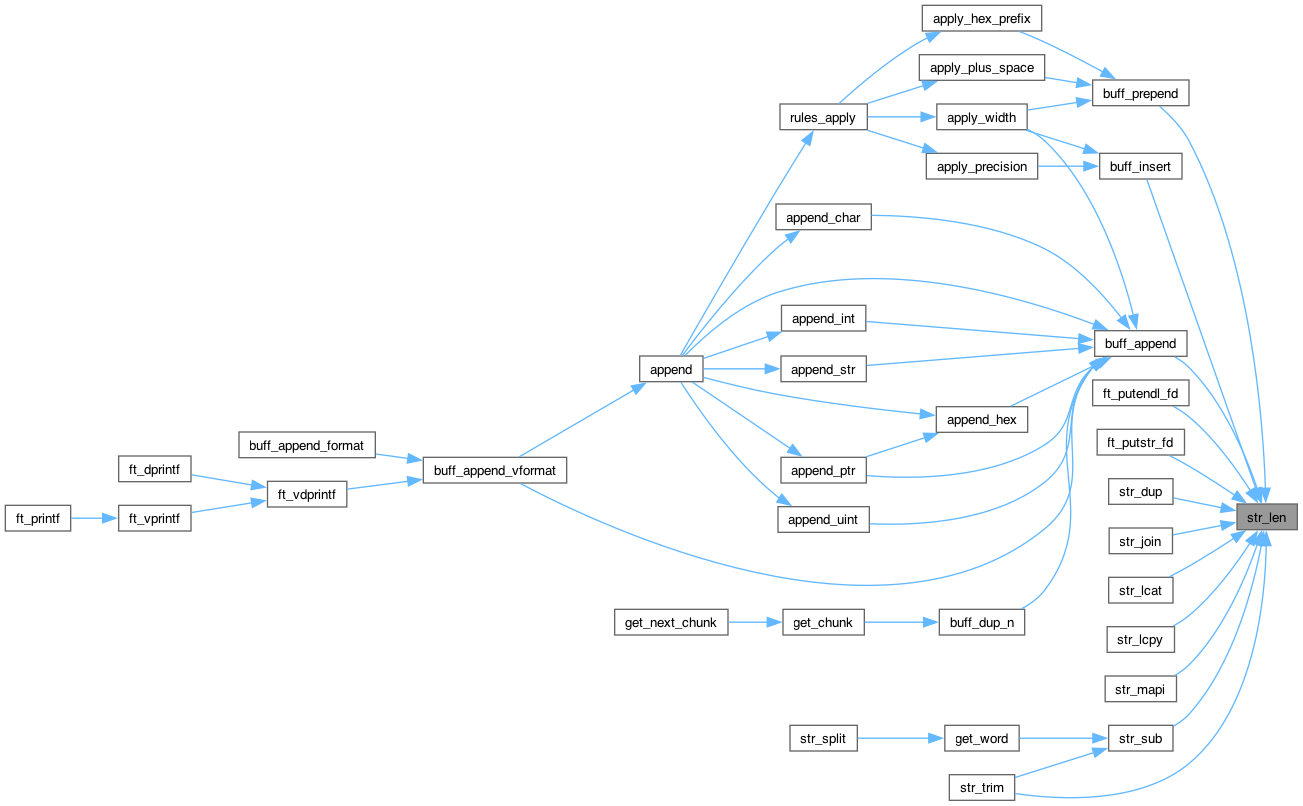
◆ str_len()
| size_t str_len | ( | const char * | s | ) |
Calculates the length of a string.
- Parameters
-
s String to measure.
- Returns
- Length of the string (not including null terminator).
◆ str_mapi()
| char * str_mapi | ( | char const * | s, |
| char(*)(unsigned int, char) | f | ||
| ) |
Creates a new string by applying a function to each character.
- Note
- Caller owns the returned string and must free it.
- Parameters
-
s String to transform (borrowed). f Function taking index and character, returning new character.
- Returns
- Newly allocated transformed string (owned), or NULL on failure.

◆ str_ncmp()
| int str_ncmp | ( | const char * | s1, |
| const char * | s2, | ||
| size_t | n | ||
| ) |
Compares at most n characters of two strings.
- Parameters
-
s1 First string. s2 Second string. n Maximum number of characters to compare.
- Returns
- Difference of first differing characters, or 0 if equal.

◆ str_ndup()
| char * str_ndup | ( | const char * | src, |
| size_t | len | ||
| ) |
Duplicates the first len bytes of a string.
- Note
- Caller owns the returned string and must free it.
- Parameters
-
src String to duplicate (borrowed). len Maximum number of bytes to copy.
- Returns
- Newly allocated copy (owned), or NULL on failure.
◆ str_nstr()
| char * str_nstr | ( | const char * | haystack, |
| const char * | needle, | ||
| size_t | len | ||
| ) |
Locates a substring within a string, limited by length.
- Note
- Returned pointer is borrowed from haystack. Do not free it directly.
- Parameters
-
haystack String to search in (borrowed). needle Substring to find (borrowed). len Maximum characters to search.
- Returns
- Pointer to start of substring (borrowed), or NULL if not found.
◆ str_rchr()
| char * str_rchr | ( | const char * | s, |
| int | c | ||
| ) |
Locates the last occurrence of a character in a string.
- Note
- Returned pointer is borrowed from s. Do not free it directly.
- If c is '\0', returns pointer to the terminating null.
- Parameters
-
s String to search (borrowed). c Character to find.
- Returns
- Pointer to the character (borrowed), or NULL if not found.
◆ str_split()
| char ** str_split | ( | char const * | s, |
| char | c | ||
| ) |
Splits a string into an array of strings using a delimiter.
- Note
- Caller owns the returned array and each string within it. Free each string then free the array itself.
- Parameters
-
s String to split (borrowed). c Delimiter character.
- Returns
- NULL-terminated array of strings (owned), or NULL on failure.
◆ str_sub()
| char * str_sub | ( | char const * | s, |
| unsigned int | start, | ||
| size_t | len | ||
| ) |
Extracts a substring from a string.
- Note
- Caller owns the returned string and must free it.
- Parameters
-
s Source string (borrowed). start Starting index. len Maximum length of substring.
- Returns
- Newly allocated substring (owned), or NULL on failure.
◆ str_trim()
| char * str_trim | ( | char const * | s1, |
| char const * | set | ||
| ) |
Trims characters from the beginning and end of a string.
- Note
- Caller owns the returned string and must free it.
- Parameters
-
s1 String to trim (borrowed). set Characters to trim (borrowed).
- Returns
- Newly allocated trimmed string (owned), or NULL on failure.