NUL-terminated dynamic string utilities. More...
Functions | |
| bool | string_adjust (t_string *string) |
| Shrinks string capacity to match its current length plus NUL byte. | |
| bool | string_append (t_string *dst, const t_string *src) |
| Appends the content of a source string to the end of a string. | |
| bool | string_append_format (t_string *string, const char *fstring,...) |
| Appends formatted text to string using variadic arguments. | |
| bool | string_append_n (t_string *s, const char *str, long n) |
| Appends n first bytes of a string to the end of a dynamic string. | |
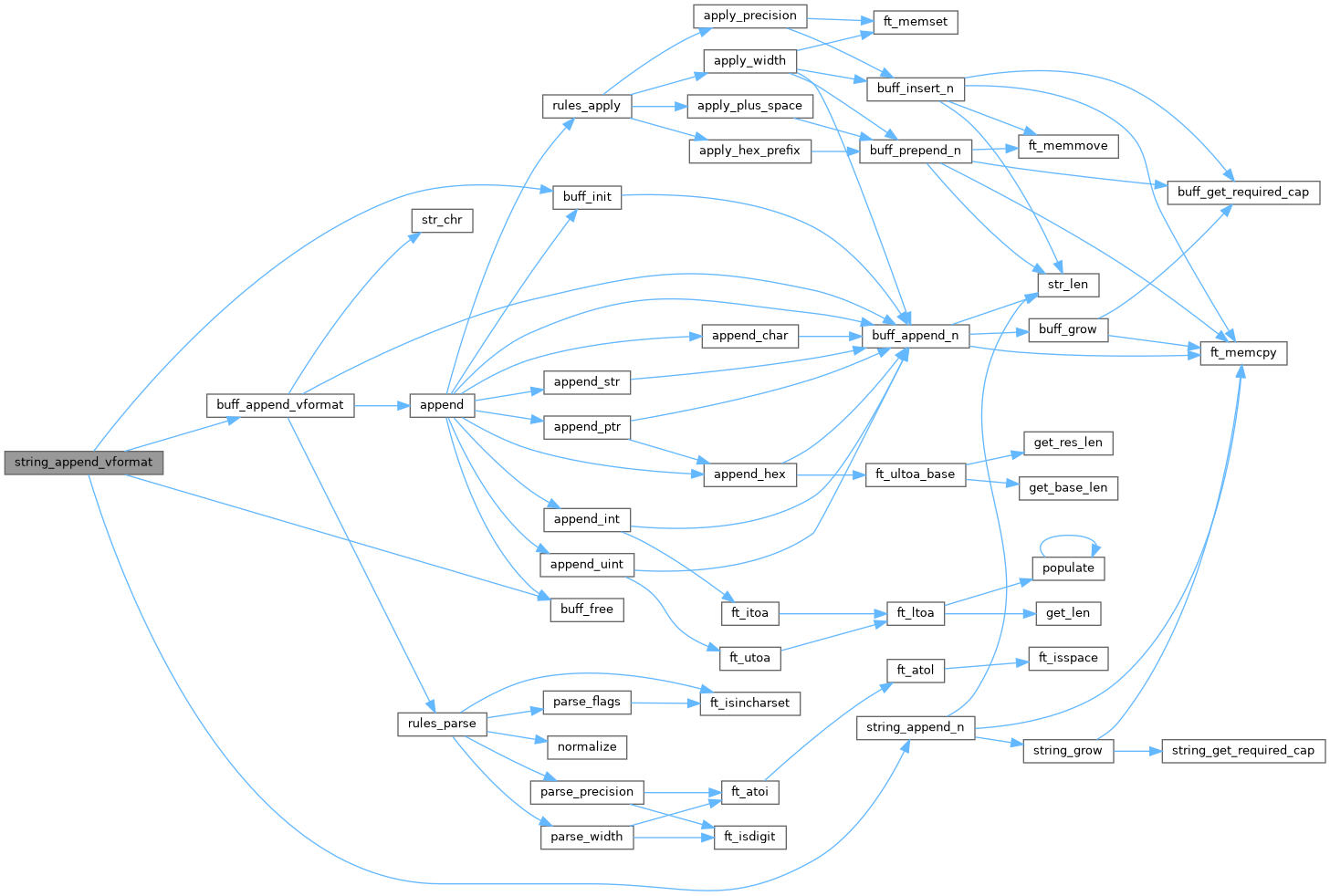
| bool | string_append_vformat (t_string *string, const char *fstring, va_list args) |
| Appends formatted text to string using va_list. | |
| bool | string_cmp (const t_string *a, const t_string *b) |
| Compares two strings byte by byte. | |
| bool | string_dup (t_string *dst, const t_string *src) |
| Copies the content of a source string into an existing string. | |
| bool | string_dup_n (t_string *dst, const t_string *src, size_t n) |
| Copies up to n bytes from a source string into an existing string. | |
| void | string_free (t_string *string) |
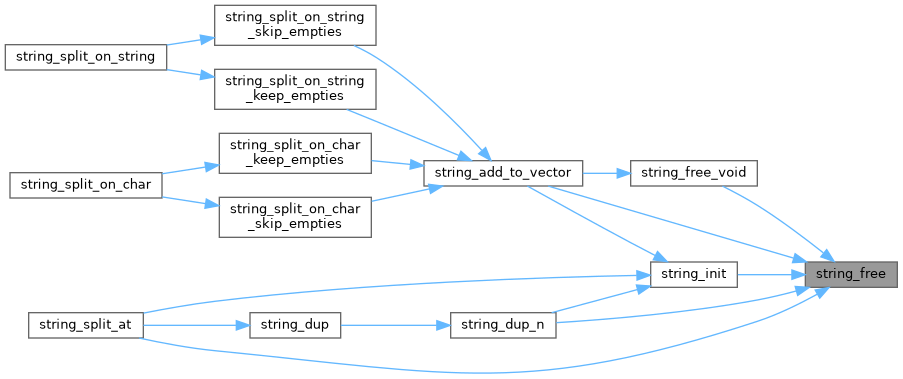
| Frees the string's internal data. | |
| void | string_free_void (void *string) |
| Frees a t_string item through a generic void* callback signature. | |
| ssize_t | string_get_index_c (const t_string *string, char c) |
| Finds the index of the first occurrence of a character in the string. | |
| ssize_t | string_get_index_s (const t_string *string, const char *s, ssize_t slen) |
| Finds the first occurrence of a substring in the string. | |
| bool | string_init (t_string *s, size_t initial_cap, const char *str, long n) |
| Initializes a string with the specified initial capacity. | |
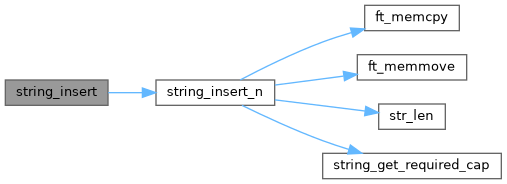
| bool | string_insert (t_string *dst, size_t index, const t_string *src) |
| Inserts a source string in a string at the specified index. | |
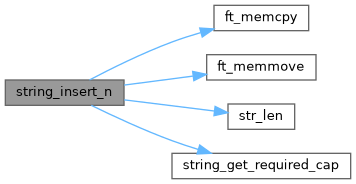
| bool | string_insert_n (t_string *s, size_t index, const char *str, long n) |
| Inserts n first bytes of a string at the specified index. | |
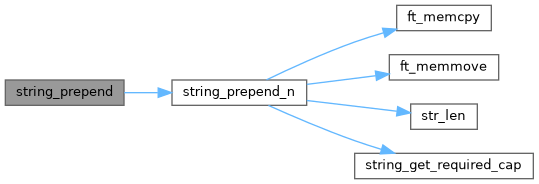
| bool | string_prepend (t_string *dst, const t_string *src) |
| Prepends a source string to the beginning of a string. | |
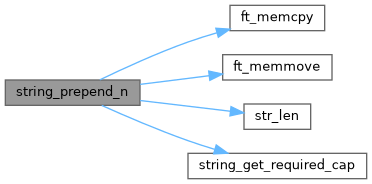
| bool | string_prepend_n (t_string *s, const char *str, long n) |
| Prepends n first bytes of a string to the beginning of a string. | |
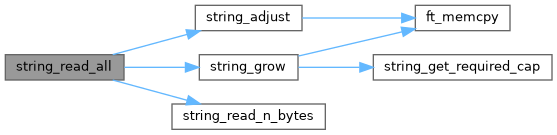
| bool | string_read_all (t_string *string, int fd) |
| Reads all available data from a file descriptor into string. | |
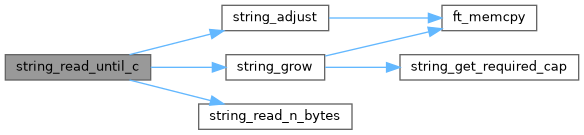
| bool | string_read_until_c (t_string *string, int fd, char c) |
| Reads from a file descriptor until a specific character is found. | |
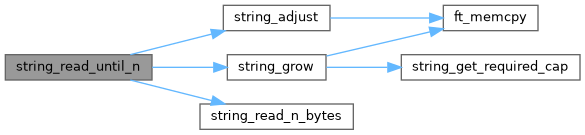
| bool | string_read_until_n (t_string *string, int fd, size_t n) |
| Reads up to n bytes from a file descriptor into string. | |
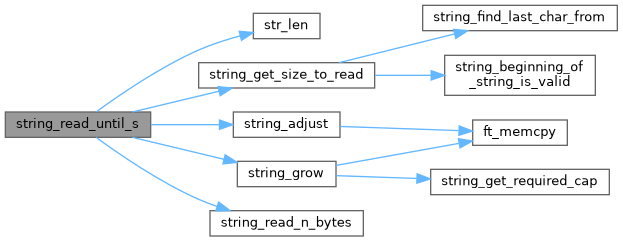
| bool | string_read_until_s (t_string *string, int fd, const char *s, ssize_t slen) |
| Reads from a file descriptor until a specific substring is found. | |
| void | string_rm_part (t_string *string, size_t i_start, ssize_t len) |
| Removes a portion of the string starting at i_start. | |
| bool | string_split_at (const t_string *src, size_t index, t_string *out_before, t_string *out_after) |
| Splits a string into two initialized strings at a byte index. | |
| bool | string_split_on_char (const t_string *src, char c, bool keep_empty_entries, t_vector *out) |
| Splits a string on a delimiter character into a t_vector. | |
| bool | string_split_on_string (const t_string *src, const char *sep, bool keep_empty_entries, t_vector *out) |
| Splits a string on a delimiter C-string into a t_vector. | |
| void | string_take (t_string *dst, char *src, size_t cap, ssize_t len) |
| Installs an existing buffer in a string without copying it. | |
| void | string_take_string (t_string *dst, t_string *src) |
| Move the internal storage of one string into another string. | |
| void | string_trim_leading (t_string *string, char c) |
| Removes leading copies of a character from a string. | |
Detailed Description
NUL-terminated dynamic string utilities.
Functions to initialize, grow, shrink, read, format and manipulate dynamic strings whose allocated data is kept NUL-terminated.
Function Documentation
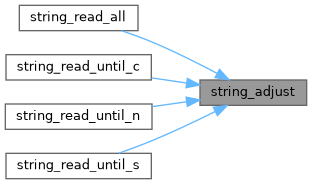
◆ string_adjust()
| bool string_adjust | ( | t_string * | string | ) |
Shrinks string capacity to match its current length plus NUL byte.
- Warning
- string must be initialized before calling this function.
- Parameters
-
string Pointer to an initialized string (borrowed).
- Returns
- true on success, false on memory allocation failure.

◆ string_append()
Appends the content of a source string to the end of a string.
Destination storage is automatically grown if necessary.
- Warning
- dst and src must be initialized before calling this function.
- Parameters
-
dst Destination string to append to (borrowed). src Source string to append (borrowed, read-only).
- Returns
- true on success, false on memory allocation failure.

◆ string_append_format()
| bool string_append_format | ( | t_string * | string, |
| const char * | fstring, | ||
| ... | |||
| ) |
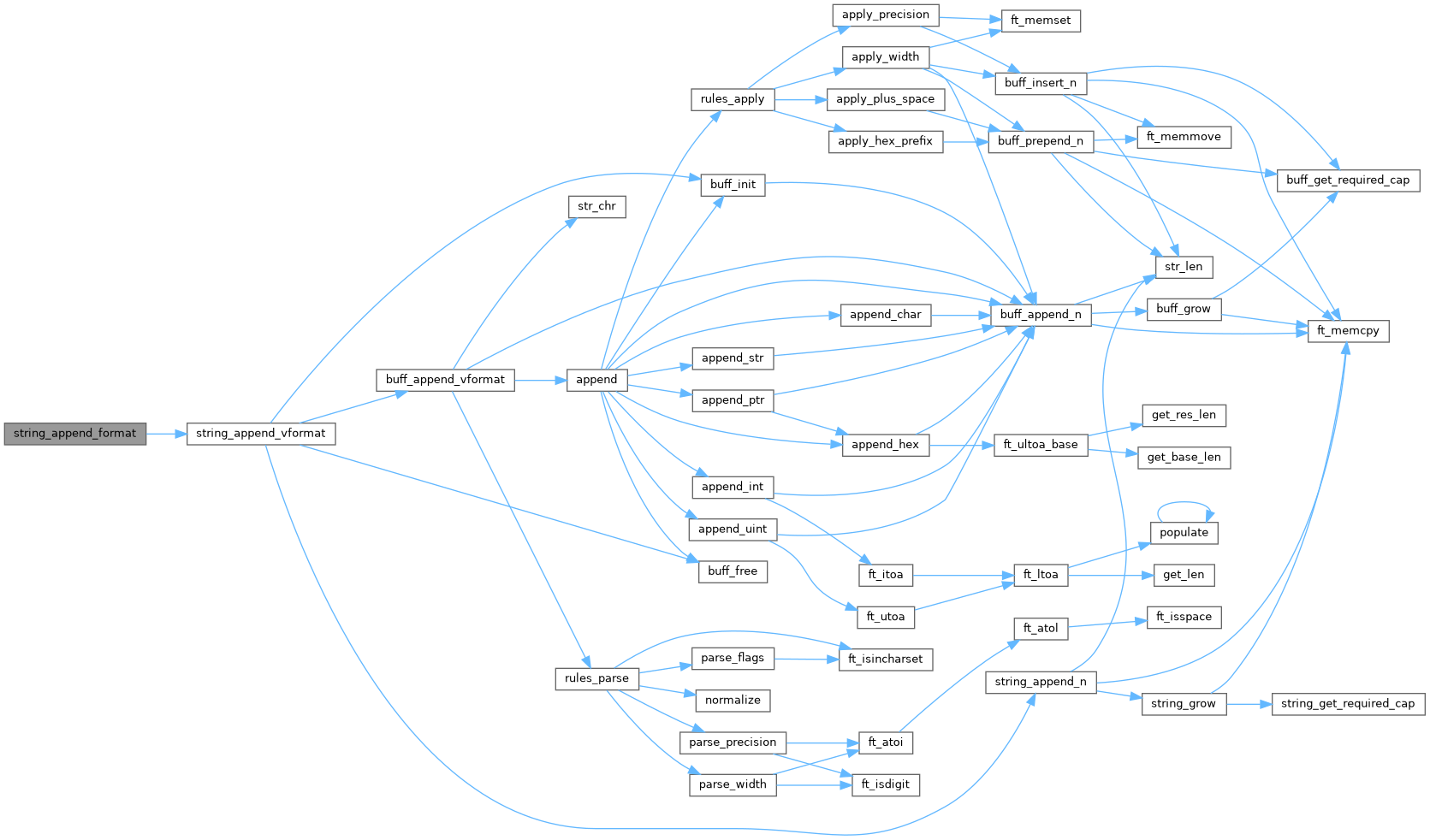
Appends formatted text to string using variadic arguments.
Supports the same format subset as buff_append_format().
- Warning
- string must be initialized before calling this function.
- Parameters
-
string Pointer to an initialized string (borrowed). fstring Format string (borrowed, read-only). ... Variadic arguments for format specifiers.
- Returns
- true on success, false on failure.
◆ string_append_n()
| bool string_append_n | ( | t_string * | s, |
| const char * | str, | ||
| long | n | ||
| ) |
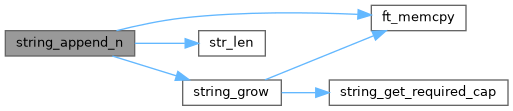
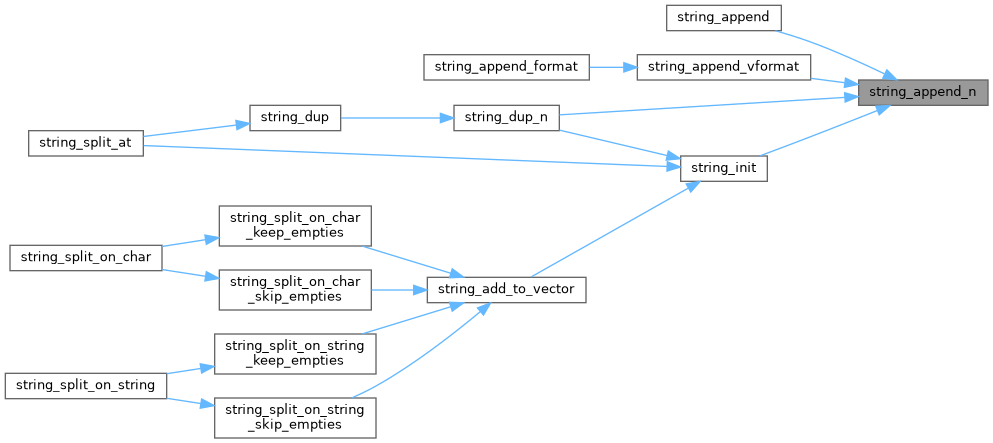
Appends n first bytes of a string to the end of a dynamic string.
Destination storage is automatically grown if necessary.
- Warning
- s must be initialized before calling this function.
- UB if n > 0 and str is shorter than n bytes.
- Parameters
-
s Destination string to append to (borrowed). str String to append (borrowed, read-only). n Number of bytes to append, or -1 to use str_len(str).
- Returns
- true on success, false on memory allocation failure.
◆ string_append_vformat()
| bool string_append_vformat | ( | t_string * | string, |
| const char * | fstring, | ||
| va_list | args | ||
| ) |
Appends formatted text to string using va_list.
- Warning
- string must be initialized before calling this function.
- Parameters
-
string Pointer to an initialized string (borrowed). fstring Format string (borrowed, read-only). args Variable argument list.
- Returns
- true on success, false on failure.

◆ string_cmp()
Compares two strings byte by byte.
- Warning
- a and b must be initialized before calling this function.
- Parameters
-
a First string to compare (borrowed, read-only). b Second string to compare (borrowed, read-only).
- Returns
- true if the strings have the same length and content, false otherwise.
◆ string_dup()
Copies the content of a source string into an existing string.
- Warning
- dst and src must be initialized before calling this function.
- The previous logical content of dst is replaced, whether the function succeeds or fails.
- Parameters
-
dst Destination string to overwrite (borrowed, initialized by the function). src Source string to duplicate (borrowed, initialized).
- Returns
- true on success, false on memory allocation failure.


◆ string_dup_n()
Copies up to n bytes from a source string into an existing string.
- Warning
- dst and src must be initialized before calling this function.
- The previous logical content of dst is replaced, whether the function succeeds or fails.
- Parameters
-
dst Destination string to overwrite (borrowed, initialized by the function). src Source string to duplicate (borrowed, initialized). n Maximum number of bytes to copy.
- Returns
- true on success, false on memory allocation failure.


◆ string_free()
| void string_free | ( | t_string * | string | ) |
Frees the string's internal data.
Frees string->data only when string owns its storage, that is when string->cap is greater than 0. Then sets string->data to NULL and string->len and string->cap to 0.
- Warning
- Does not free the t_string struct itself, only its internal data.
- Parameters
-
string Pointer to the string (borrowed).
◆ string_free_void()
| void string_free_void | ( | void * | string | ) |
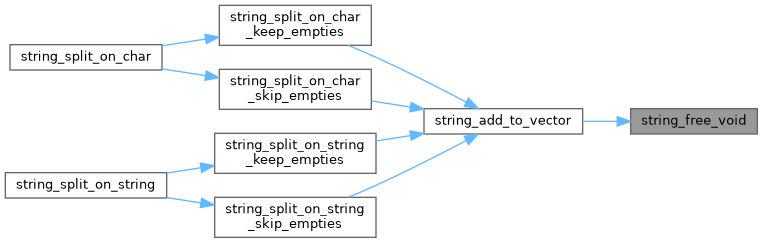
Frees a t_string item through a generic void* callback signature.
Wrapper around string_free() intended for APIs that expect void (*)(void *), such as vector_free().
- Warning
- string must point to an initialized t_string.
- Does not free the t_string struct itself, only its internal data.
- Parameters
-
string Pointer to a t_string item passed as void* (borrowed).

◆ string_get_index_c()
| ssize_t string_get_index_c | ( | const t_string * | string, |
| char | c | ||
| ) |
Finds the index of the first occurrence of a character in the string.
- Warning
- string must be initialized before calling this function.
- Parameters
-
string Pointer to an initialized string (borrowed, read-only). c Character to find.
- Returns
- Index of the character, or -1 if not found.
◆ string_get_index_s()
| ssize_t string_get_index_s | ( | const t_string * | string, |
| const char * | s, | ||
| ssize_t | slen | ||
| ) |
Finds the first occurrence of a substring in the string.
- Warning
- string must be initialized before calling this function.
- Parameters
-
string Pointer to an initialized string (borrowed, read-only). s Substring to find (borrowed, read-only). slen Number of bytes in s, or -1 to use str_len(s).
- Returns
- Index of the substring, or -1 if not found.

◆ string_init()
| bool string_init | ( | t_string * | s, |
| size_t | initial_cap, | ||
| const char * | str, | ||
| long | n | ||
| ) |
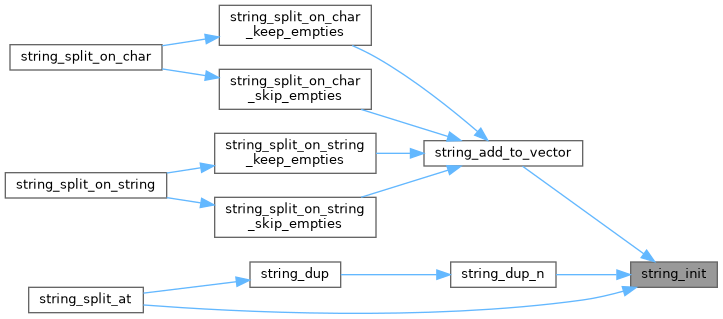
Initializes a string with the specified initial capacity.
If str is not NULL, it is appended after initialization. If str is NULL, n is ignored.
- Note
- Cannot fail only when initial_cap == 0 and str == NULL.
- Warning
- When initial_cap == 0 and str == NULL, no allocation is performed: data is NULL and cannot be used as a valid C string until a function that allocates storage has been called.
- Parameters
-
s Pointer to the string structure to initialize (borrowed, uninitialized). initial_cap Initial capacity of the string. str Optional string to append after initialization (borrowed, read-only). n Number of bytes to append, or -1 to use str_len(str).
- Returns
- true on success, false on memory allocation failure.

◆ string_insert()
Inserts a source string in a string at the specified index.
Destination storage is automatically grown if necessary.
- Warning
- dst and src must be initialized before calling this function.
- index must be in range [0, dst->len].
- Parameters
-
dst Destination string to insert into (borrowed). index Insertion index. src Source string to insert (borrowed, read-only).
- Returns
- true on success, false on memory allocation failure.
◆ string_insert_n()
| bool string_insert_n | ( | t_string * | s, |
| size_t | index, | ||
| const char * | str, | ||
| long | n | ||
| ) |
Inserts n first bytes of a string at the specified index.
Destination storage is automatically grown if necessary.
- Warning
- s must be initialized before calling this function.
- index must be in range [0, s->len].
- UB if n > 0 and str is shorter than n bytes.
- Parameters
-
s Destination string to insert into (borrowed). index Insertion index. str String to insert (borrowed, read-only). n Number of bytes to insert, or -1 to use str_len(str).
- Returns
- true on success, false on memory allocation failure.

◆ string_prepend()
Prepends a source string to the beginning of a string.
Destination storage is automatically grown if necessary.
- Warning
- dst and src must be initialized before calling this function.
- Parameters
-
dst Destination string to prepend to (borrowed). src Source string to prepend (borrowed, read-only).
- Returns
- true on success, false on memory allocation failure.
◆ string_prepend_n()
| bool string_prepend_n | ( | t_string * | s, |
| const char * | str, | ||
| long | n | ||
| ) |
Prepends n first bytes of a string to the beginning of a string.
Destination storage is automatically grown if necessary.
- Warning
- s must be initialized before calling this function.
- UB if n > 0 and str is shorter than n bytes.
- Parameters
-
s Destination string to prepend to (borrowed). str String to prepend (borrowed, read-only). n Number of bytes to prepend, or -1 to use str_len(str).
- Returns
- true on success, false on memory allocation failure.

◆ string_read_all()
| bool string_read_all | ( | t_string * | string, |
| int | fd | ||
| ) |
Reads all available data from a file descriptor into string.
- Note
- Interrupted reads (EINTR) are retried.
- On failure, string->data is NOT automatically freed.
- Warning
- string must be initialized before calling this function.
- Parameters
-
string Pointer to an initialized string (borrowed). fd File descriptor to read from.
- Returns
- true on success, false if read failed.
◆ string_read_until_c()
| bool string_read_until_c | ( | t_string * | string, |
| int | fd, | ||
| char | c | ||
| ) |
Reads from a file descriptor until a specific character is found.
- Note
- Interrupted reads (EINTR) are retried.
- On failure, string->data is NOT automatically freed.
- Warning
- string must be initialized before calling this function.
- Parameters
-
string Pointer to an initialized string (borrowed). fd File descriptor to read from. c Character to search for.
- Returns
- true if c or EOF was encountered, false on memory or read error.
◆ string_read_until_n()
| bool string_read_until_n | ( | t_string * | string, |
| int | fd, | ||
| size_t | n | ||
| ) |
Reads up to n bytes from a file descriptor into string.
- Note
- Interrupted reads (EINTR) are retried.
- On failure, string->data is NOT automatically freed.
- Warning
- string must be initialized before calling this function.
- Parameters
-
string Pointer to an initialized string (borrowed). fd File descriptor to read from. n Number of bytes to read.
- Returns
- true on success or EOF, false on memory or read error.
◆ string_read_until_s()
| bool string_read_until_s | ( | t_string * | string, |
| int | fd, | ||
| const char * | s, | ||
| ssize_t | slen | ||
| ) |
Reads from a file descriptor until a specific substring is found.
- Note
- Interrupted reads (EINTR) are retried.
- On failure, string->data is NOT automatically freed.
- Warning
- string must be initialized before calling this function.
- Parameters
-
string Pointer to an initialized string (borrowed). fd File descriptor to read from. s Target substring to search for (borrowed, read-only). slen Length of s, or -1 to use str_len(s).
- Returns
- true if s or EOF was encountered, false on memory or read error.
◆ string_rm_part()
| void string_rm_part | ( | t_string * | string, |
| size_t | i_start, | ||
| ssize_t | len | ||
| ) |
Removes a portion of the string starting at i_start.
- Note
- If len < 0, deletes all string content from i_start to end.
- Warning
- string must be initialized before calling this function.
- Parameters
-
string Pointer to an initialized string (borrowed). i_start Starting index for removal. len Number of bytes to remove, or negative to remove until end.


◆ string_split_at()
| bool string_split_at | ( | const t_string * | src, |
| size_t | index, | ||
| t_string * | out_before, | ||
| t_string * | out_after | ||
| ) |
Splits a string into two initialized strings at a byte index.
- Note
out_beforeandout_afterare initialized by the function.-
When
indexis greater than or equal tosrc->len,out_beforereceives a full copy ofsrcandout_afteris initialized empty.
- Warning
srcmust be initialized before calling this function.-
out_beforeandout_aftermust not already own allocated data.
- Parameters
-
src Source string to split (borrowed, read-only). index Split index. out_before Destination receiving the bytes before index(borrowed, initialized by the function).out_after Destination receiving the bytes starting at index(borrowed, initialized by the function).
- Returns
- true on success, false on memory allocation failure.

◆ string_split_on_char()
Splits a string on a delimiter character into a t_vector.
Empty fields are kept when keep_empty_entries is true and skipped when it is false.
- Note
outis initialized by the function withsizeof(t_string)items.-
When
keep_empty_entriesistrueandsrcis empty,outreceives one empty t_string. -
On failure, the function frees every initialized item and resets
out.
- Warning
srcmust be initialized before calling this function.-
outmust not already own allocated data.
- Parameters
-
src Source string to split (borrowed, read-only). c Delimiter character. keep_empty_entries True to keep empty fields, false to drop them. out Destination vector receiving initialized t_string items (borrowed, initialized by the function).
- Returns
- true on success, false on memory allocation failure.

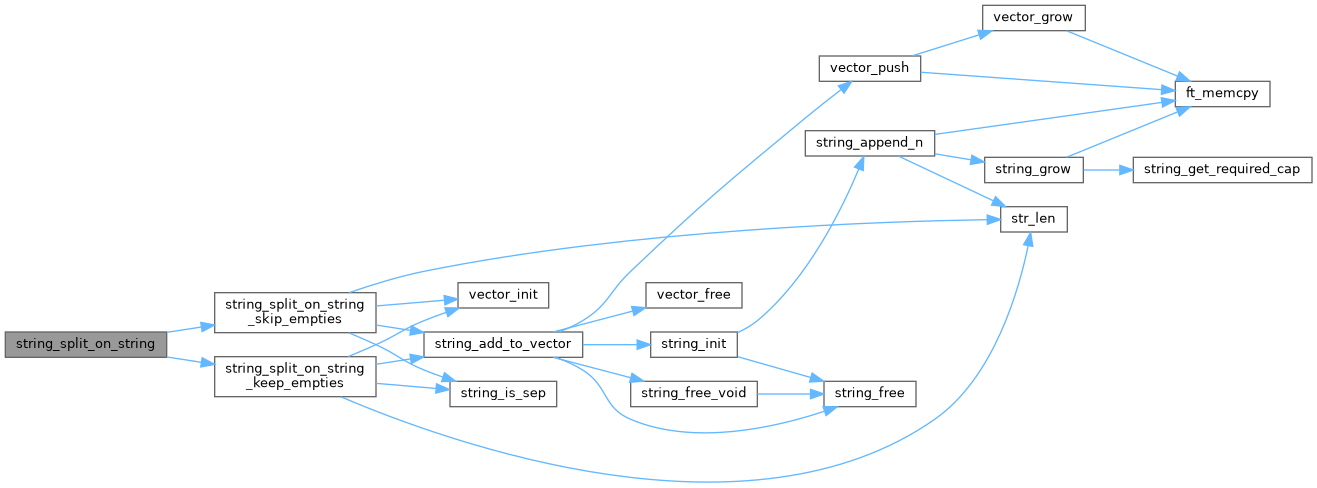
◆ string_split_on_string()
| bool string_split_on_string | ( | const t_string * | src, |
| const char * | sep, | ||
| bool | keep_empty_entries, | ||
| t_vector * | out | ||
| ) |
Splits a string on a delimiter C-string into a t_vector.
Empty fields are kept when keep_empty_entries is true and skipped when it is false.
- Note
outis initialized by the function withsizeof(t_string)items.-
When
sepis empty andkeep_empty_entriesistrue,outreceives one item containing a full copy ofsrc. -
When
sepis empty andkeep_empty_entriesisfalse,outreceives one item only ifsrcis not empty. -
On failure, the function frees every initialized item and resets
out.
- Warning
srcmust be initialized before calling this function.-
sepmust point to a valid NUL-terminated C-string. -
outmust not already own allocated data.
- Parameters
-
src Source string to split (borrowed, read-only). sep Delimiter C-string (borrowed, read-only). keep_empty_entries True to keep empty fields, false to drop them. out Destination vector receiving initialized t_string items (borrowed, initialized by the function).
- Returns
- true on success, false on memory allocation failure.
◆ string_take()
| void string_take | ( | t_string * | dst, |
| char * | src, | ||
| size_t | cap, | ||
| ssize_t | len | ||
| ) |
Installs an existing buffer in a string without copying it.
The buffer is not copied. The string structure is updated to reference the provided storage directly. When cap is 0, dst borrows src. When cap is greater than 0, dst owns src.
- Warning
- dst must point to an initialized t_string.
- Parameters
-
dst Destination string to update (borrowed). src Buffer installed in dst(borrowed, read-only).cap Capacity of src, in bytes. len Logical length of the string stored in src or -1 to use str_len().

◆ string_take_string()
Move the internal storage of one string into another string.
The internal data is not copied. After the move, src keeps the same data and len values but its cap is set to 0.
- Note
- Calling string_free() on
srcafter a successful move is unnecessary but safe. -
If the caller later modifies
srcthrough an API that grows or reallocates storage, new storage is allocated forsrcinstead of reusing the moved storage.
- Warning
- The previous content of
dstis overwritten without being freed.
- Parameters
-
dst Destination string receiving the moved storage (borrowed). src Source string whose storage is moved to dst(borrowed).
◆ string_trim_leading()
| void string_trim_leading | ( | t_string * | string, |
| char | c | ||
| ) |
Removes leading copies of a character from a string.
- Note
- The string is modified in place and no allocation is performed.
- Warning
- string must be initialized before calling this function.
- Parameters
-
string String to trim (borrowed). c Character to remove.